
Trial Preparation
7 Things Coaches Notice in the First Few Minutes of a Trial
Your trial starts before the whistle blows.
European coaches make assessments quickly. Before you've touched the ball five times, a coach already has a read on you — your attitude, your awareness, your body language. Here are the seven things that shape that first impression.
Body Language
Confidence before the first touch.
- Head up — show you are engaged and aware of what is around you
- Stay on your toes and ready to react in any direction
- Confidence shows before your first touch — coaches read it immediately
- Positive body language after a mistake communicates character, not just ability
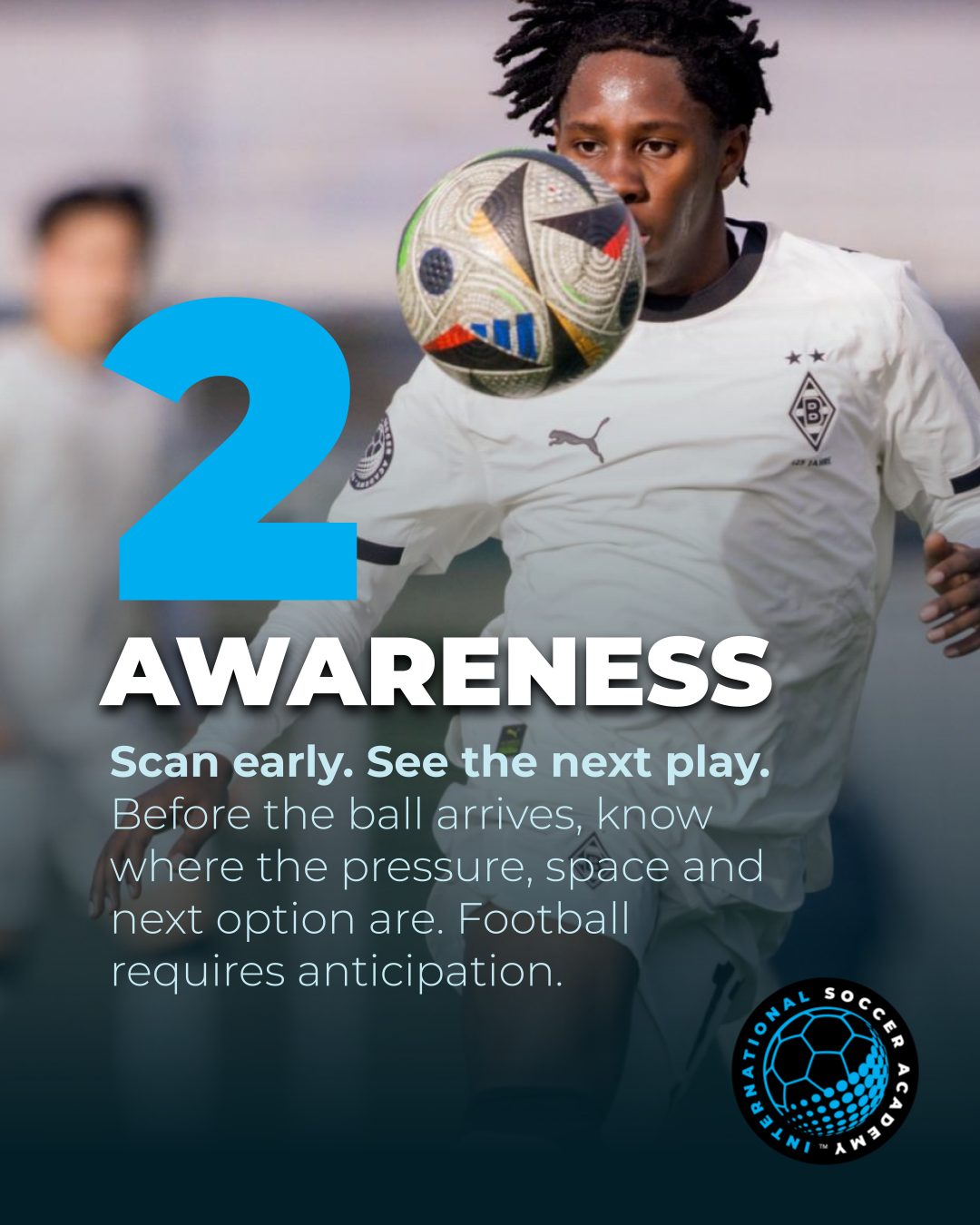
Awareness
Scan early. See the next play.
- Before the ball arrives, know where the pressure, space and next option are
- Scan constantly — your head should be moving, not fixed on the ball
- Football requires anticipation, not just reaction
- Players who see the game early make better decisions at speed
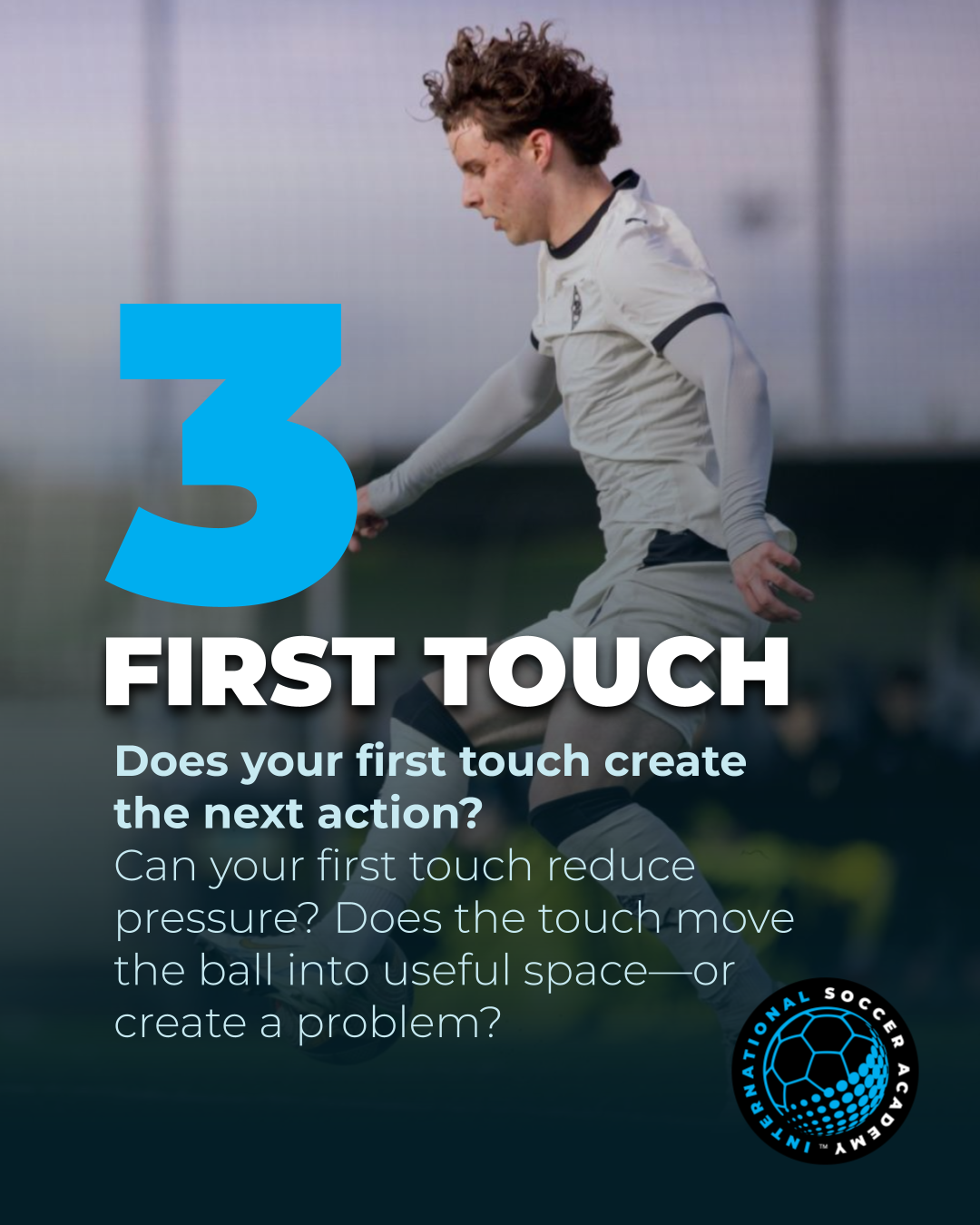
First Touch
Does your first touch create the next action?
- Can your first touch reduce pressure and buy you time?
- Does the touch move the ball into useful space — or create a problem?
- A good first touch opens options; a poor one closes them
- Coaches evaluate your first touch as a measure of technical readiness
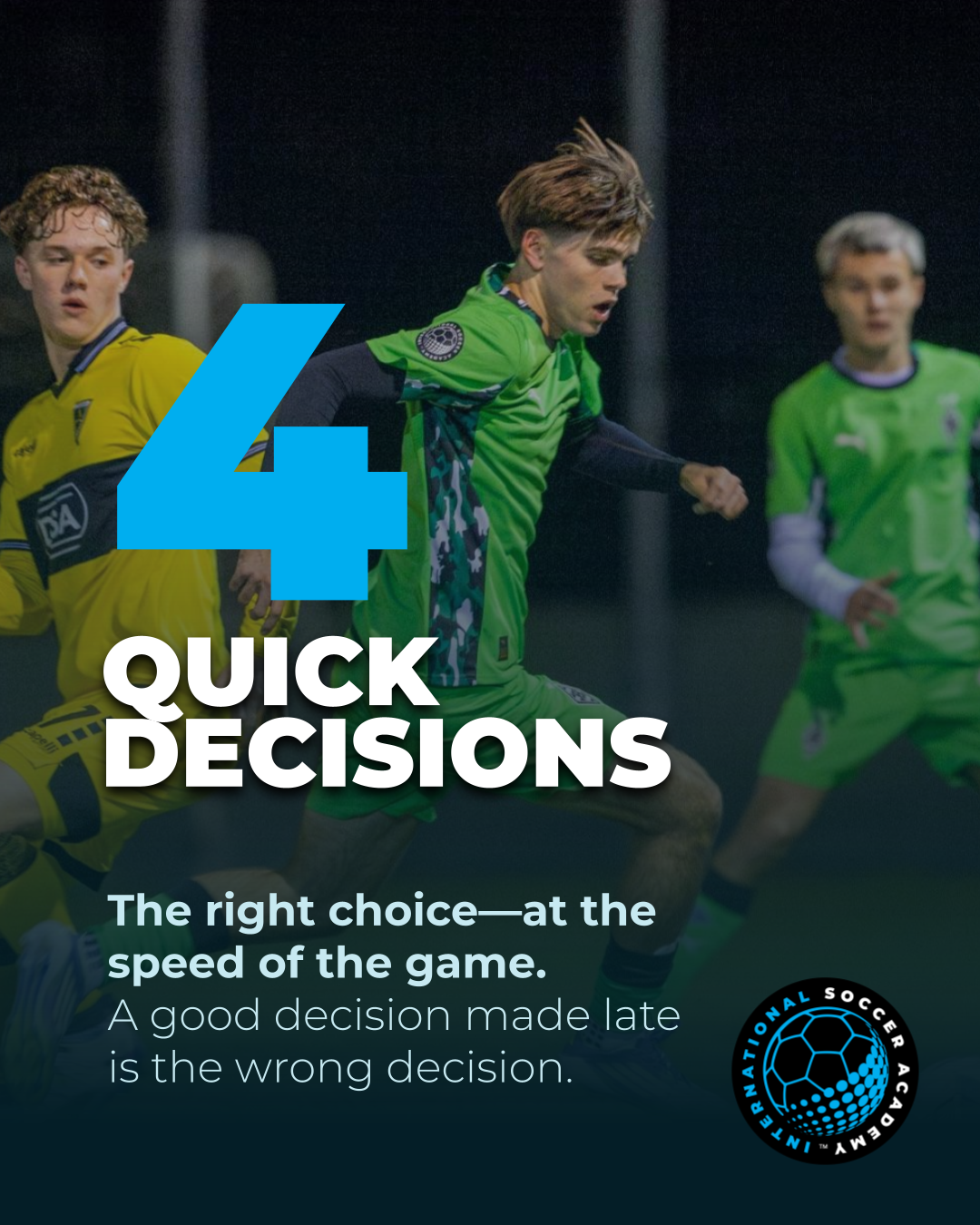
Quick Decisions
The right choice — at the speed of the game.
- A good decision made late is the wrong decision
- European football moves faster than most players expect — adapt immediately
- Play simply when under pressure; complexity is for when you have time
- Coaches want to see that you can process and act, not just think
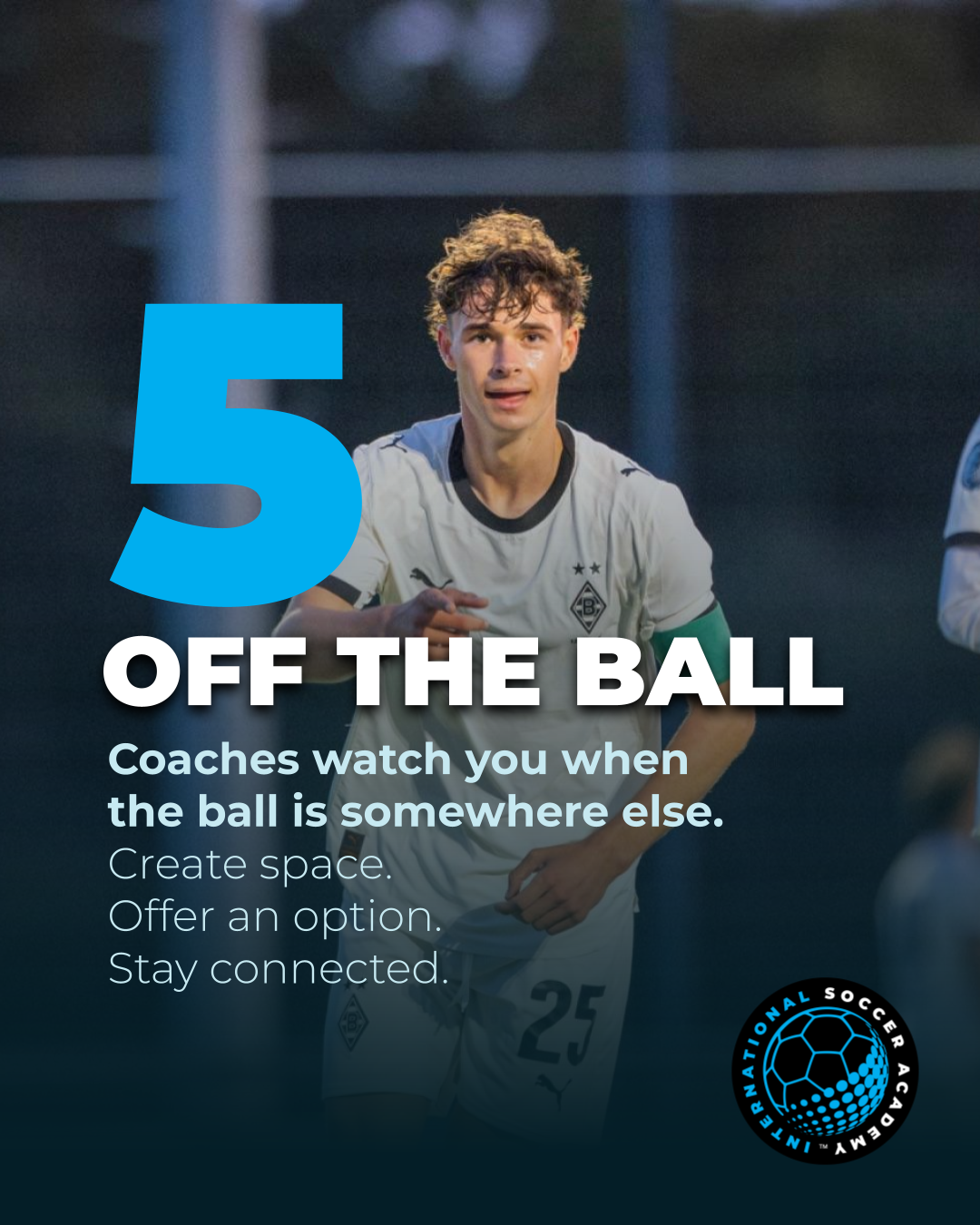
Off the Ball
Coaches watch you when the ball is somewhere else.
- Create space for yourself and your teammates with intelligent movement
- Offer an option — be available to receive at all times
- Stay connected to the shape of the team, not just the ball
- Off-the-ball work is where most players are evaluated and most players fail
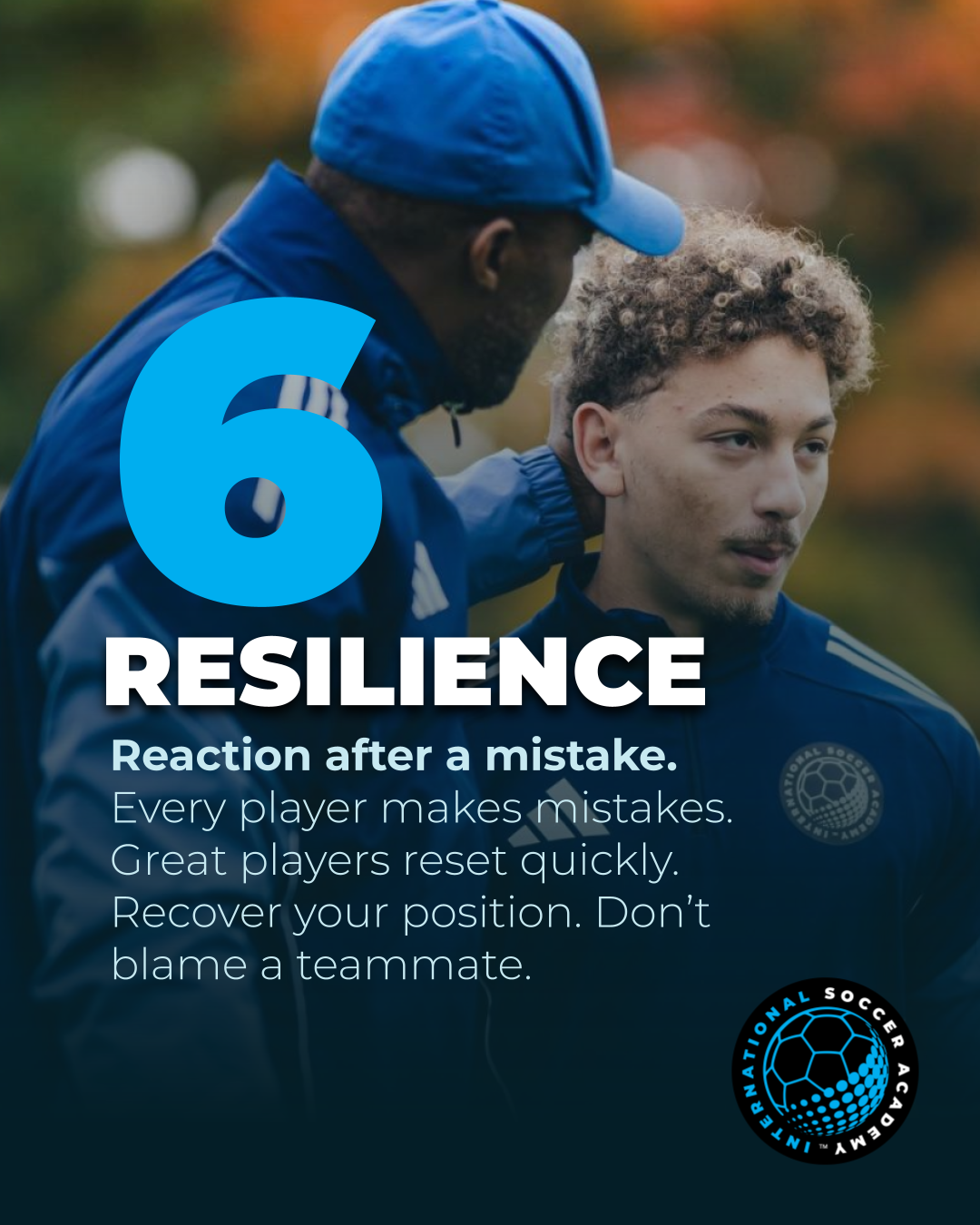
Resilience
Reaction after a mistake.
- Every player makes mistakes — what matters is what happens next
- Great players reset quickly and focus on the next action
- Recover your position immediately after losing the ball
- Never blame a teammate — coaches notice that too
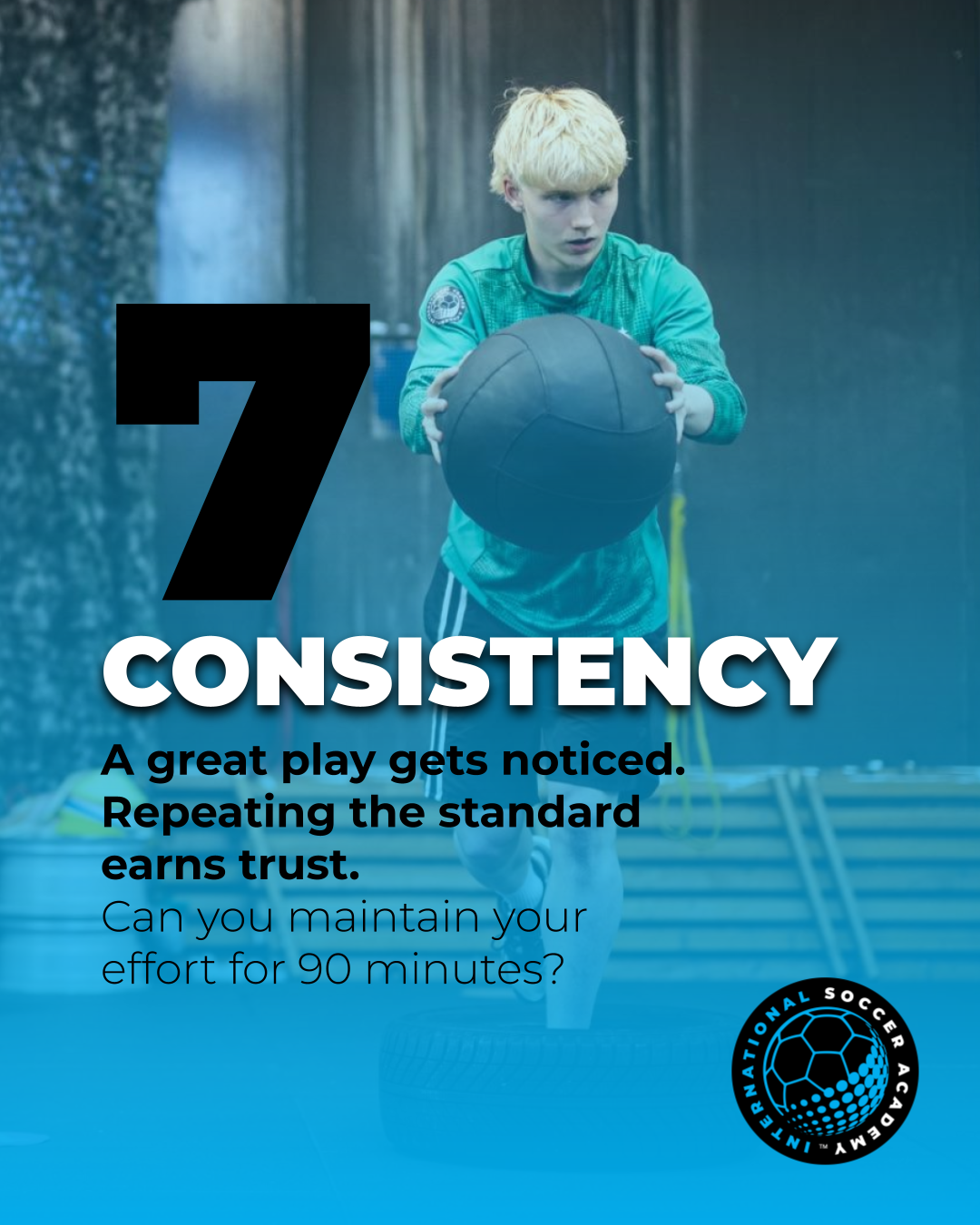
Consistency
A great play gets noticed. Repeating the standard earns trust.
- One great moment is memorable — consistent effort is what earns a contract
- Can you maintain your standard for 90 minutes, not just 20?
- Coaches are looking for players they can rely on, not just players who impress
- Consistency under fatigue is one of the clearest signs of professional readiness
Related Resources
Soccer Trials & Contracts
See ISA alumni who earned professional contracts after European trials.
Premier Pro Pathway
ISA's structured pathway to professional soccer in Europe.
Borussia Mönchengladbach Academy
Train and compete inside a Bundesliga club's development system.
Girona FC Gap Year
Train with a La Liga club and get evaluated by professional coaches in Spain.
European Soccer FAQ
Everything American and Canadian players need to know about playing in Europe.
How to Prepare for Trials
A complete guide to preparing for professional soccer trials in Europe.
More in this series
Striker Development
7 ways great strikers are dangerous
Goalkeeper Development
7 ways great keepers stand out
Prepare for your opportunity
Train Where Trials Happen
ISA players train and compete at Borussia Mönchengladbach and Girona FC — professional environments where these qualities are developed and evaluated every single day.
Apply Now